
Pool Fence Rules in Queensland: A Simple Guide for Homeowners
Building a swimming pool is one of the most exciting home improvements you can make, especially in Brisbane, where outdoor living is part of everyday life. A well-designed pool can transform your backyard, increase lifestyle value and create a beautiful space for family, relaxation and entertaining. However, before you start planning the shape, tiles, waterline, pool surrounds or landscaping, it is important to understand one essential part of pool ownership: pool fence rules in Queensland.
In Queensland, pool fencing is not just a design feature. It is a legal safety requirement designed to prevent unsupervised access to the pool area, especially by young children. Every homeowner planning a new pool, pool renovation, plunge pool, concrete pool, courtyard pool, glass edge pool or spa should understand the basic pool safety standards before construction begins.
At CL Pools Brisbane, we have been trusted swimming pool builders in Brisbane since 1972. With more than 50 years of experience in concrete pool construction, plunge pools and pool renovations, we understand that a great pool is not only about beauty and craftsmanship. It must also be planned with safety, compliance, functionality and long-term usability in mind.
This guide explains the key pool fence rules in Queensland in simple language so homeowners can better understand what to consider before building or upgrading a pool.
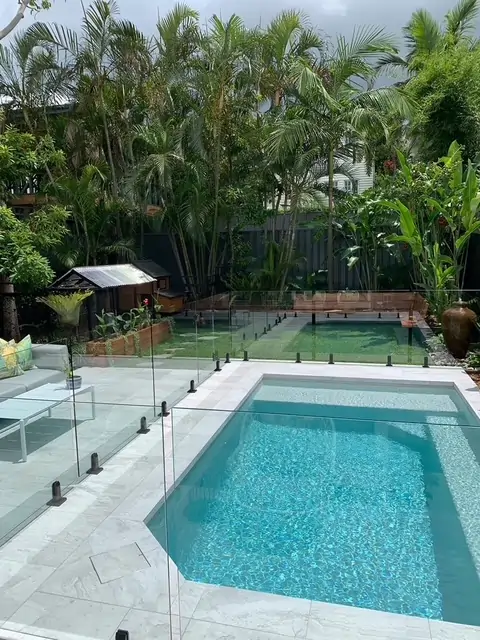
Quick Answer: Queensland Pool Fencing Rules at a Glance
If you only have a minute, here’s the summary: All regulated pools in Queensland, concrete, plunge, above-ground pools, and spas over 300mm water, must be enclosed by a compliant safety barrier meeting minimum standards.
| Requirement | Queensland Standard |
|---|---|
| Minimum fence height | 1200mm from finished ground level, at every point |
| Maximum gap under the fence | 100mm |
| Maximum gap between vertical members | 100mm |
| Non-climbable zone (gap between horizontal rails) | At least 900mm |
| Climbable objects (furniture, pot plants, trees) | Kept at least 900mm clear of the barrier |
| Gate swing direction | Outward, away from the pool area |
| Gate operation | Self-closing and self-latching from every position |
| Gate latch height | At least 1500mm above ground (or shielded if lower) |
| CPR signage | Mandatory, clearly visible near the pool |
| Pool registration | Required with the QBCC Pool Safety Register |
These rules apply whether you’re building a brand-new concrete pool, installing a compact plunge pool, or renovating an older pool that predates the current standard. Now let’s look at each requirement in more detail.
Why Pool Fence Rules Matter in Queensland
Queensland has strict pool safety laws because swimming pools can present serious risks when barriers are not properly designed, built or maintained. The Queensland Government states that if you have a pool, it must have a pool fence or barrier and that the barrier must be well maintained at all times. It also notes that damaged pool barriers must be repaired immediately.
For homeowners, this means pool safety should not be considered only at the end of a project. It should be addressed from the design stage. The pool’s location, the gate’s position, the height of surrounding fences, nearby landscaping, outdoor furniture, retaining walls, steps, decks and boundary fences can all affect whether the pool barrier meets safety requirements.
A pool that looks beautiful but has a poorly planned barrier can be stressful and expensive to correct later. That is why working with experienced Brisbane pool builders from the beginning can help you plan a pool area that is practical, attractive and easier to manage for compliance.
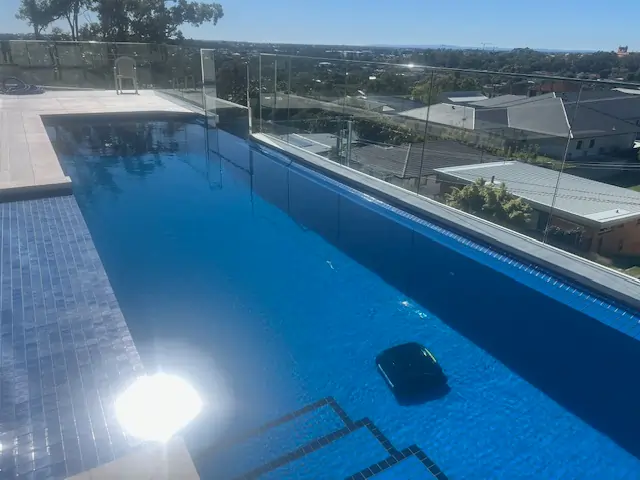
Why Pool Fencing Laws Exist in Queensland
Drowning remains one of the leading causes of accidental death among young children in Australia, and a large share of these incidents occur in home swimming pools rather than public ones. Toddlers are quick, curious and often silent when they wander, which is exactly why a compliant, well-maintained barrier matters so much. A pool fence isn’t red tape for its own sake; it’s a genuine last line of defence that buys crucial seconds and, in many cases, prevents tragedy altogether.
Because the stakes are so high, Queensland regulates pool barriers far more tightly than ordinary fencing. The rules apply to homeowners, landlords, body corporates and anyone responsible for a property with a regulated pool or spa.
The Legal Framework: Which Rules Actually Apply
Pool fencing in Queensland isn’t governed by a single simple rule, it sits within a layered legal framework:
- The Building Act 1975 (Chapter 8) is the overarching legislation that establishes pool safety as a legal requirement across the state.
- The Queensland Development Code (QDC) MP 3.4 Swimming Pool Barriers sets out the detailed technical requirements for pool barriers, referencing and modifying the national standard.
- Australian Standard AS1926.1 provides the underlying technical benchmark for pool fencing and barrier design.
- The QBCC administers the pool safety laws, maintains the Pool Safety Register, licenses pool safety inspectors, and works alongside local councils on enforcement.
- Local councils, including Brisbane City Council and surrounding shires, are authorised to investigate compliance and issue penalties where a pool barrier falls short.
If your pool was built years ago, it’s worth noting that the current standard has applied to all pools since 2010, with a phase-in period that ended in December 2015. In other words, “it was compliant when it was built” is no longer a valid excuse. Every regulated pool in Queensland needs to meet the current standard now, regardless of its age.
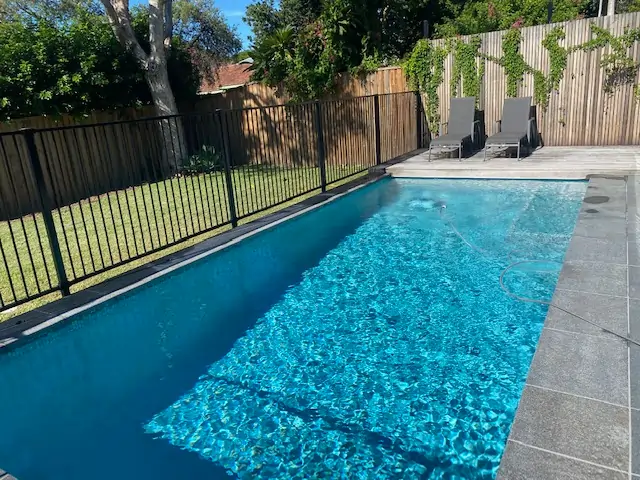
What Counts as a "Pool" Under Queensland Law
This trips up a surprising number of homeowners. Under the Building Act 1975, a “pool” is any structure or excavation that can be filled with water to a depth of 300mm or more and is used (or designed to be used) for swimming, wading, paddling or similar activities. That definition is broad enough to capture:
- Concrete and fibreglass in-ground pools
- Plunge pools and small courtyard pools
- Lap pools and indoor pools
- Spas, including those with a lockable lid (a locking cover does not remove the requirement for a fence)
- Non-portable wading pools
There is a narrow exemption for portable pools and spas, but only if they meet all three of the following: they can’t hold more than 300 mm of water, their capacity is under 2,000 litres, and they have no filtration system. Fishponds, ornamental ponds and water storage dams designed solely for those purposes fall outside the pool safety laws altogether. If you’re planning a Plungie-style plunge pool for a smaller Brisbane backyard, note that its compact size does not exempt it from fencing requirements. A 3-metre plunge pool needs exactly the same compliant barrier as a full-size concrete pool.
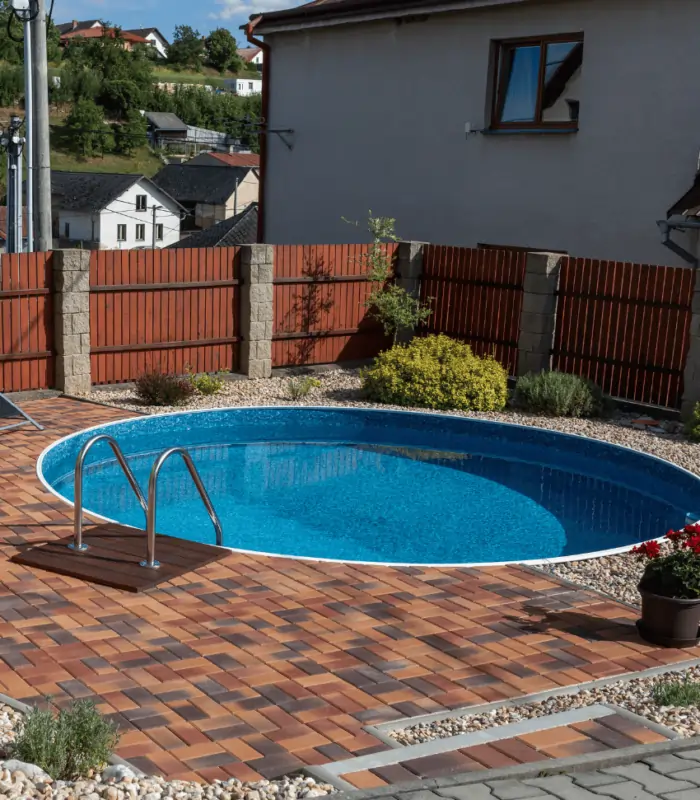
Maximum Gaps Under and Through Pool Fences
Pool fence gaps are another key element of Queensland pool safety standards. The QBCC states that fences must have a maximum gap of 100mm from finished ground level to the bottom of the barrier. It also explains that where rails are at least 900mm apart on the outside of the fence, vertical elements such as posts, slats or wires can be up to 100mm apart.
This is important because small gaps can allow children to crawl under, squeeze through, or gain access to the pool area. For glass pool fencing, aluminium fencing, timber barriers, or boundary fences used as part of the pool barrier, the gaps must be carefully planned and checked.
Common gap issues can happen around:
- uneven ground
- stairs
- retaining walls
- glass panels
- gate areas
- posts and rails
- fence bases
- drainage areas
- landscaped sections
- boundary fences
When planning a new concrete pool or renovating an existing pool, homeowners should think about how the pool barrier will sit on the finished surface. The fence line should be designed with safety and compliance in mind, not treated as an afterthought.
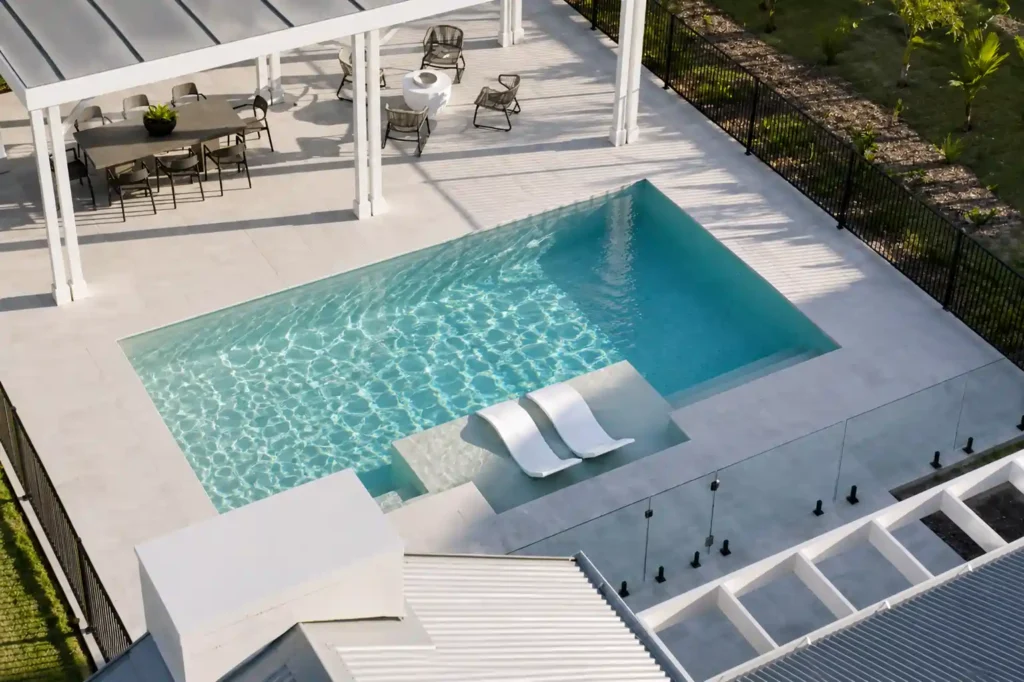
Non-Climbable Zones: What Homeowners Need to Know
A non-climbable zone is one of the most important parts of pool fence compliance in Queensland. The QBCC explains that pool fences must have continuous 900mm non-climbable zones. For fences under 1800mm high, there must also be a clear area beside the fence, which means moving climbable objects 900mm away from the outside of the fence and 300mm away from the inside.
In simple terms, a non-climbable zone is an area around the pool barrier that should not contain anything a young child could use to climb over the fence.
Common climbable objects include:
- chairs
- outdoor tables
- pot plants
- planter boxes
- BBQs
- storage boxes
- pool equipment
- toys
- ladders
- trees
- branches
- rocks
- retaining walls
- decorative screens
- horizontal rails
- low walls
- air-conditioning units
- garden features
This is one of the most common reasons pool barriers fail over time. A pool may be compliant when first built, but later become non-compliant if furniture, plants, landscaping or stored items are placed too close to the fence.
For Brisbane homeowners, this is highly relevant, as many pool areas include outdoor entertaining zones, alfresco spaces, garden beds, decks and poolside seating. These features can look beautiful, but they must be planned carefully to avoid creating a climbing risk.
Pool Gate Rules in Queensland
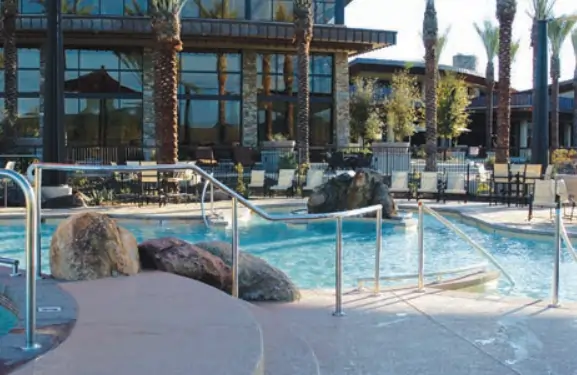
Pool gates are a major safety focus because they are the most common access point to the pool area. The QBCC states that pool gates must not open towards the pool, must be self-closing and must self-latch from any open position.
This means the gate must close and latch securely by itself, even if it is only opened slightly. It should not need to be pushed closed manually. It should not swing towards the pool area. It should not remain open or partially open.
The gate should also be checked regularly. The QBCC recommends opening the gate to several positions and checking that it self-closes and self-latches securely each time. It also recommends checking that the latch cannot be pulled, pushed or jiggled open from a closed position.
For homeowners, this means gate maintenance is not optional. Hinges can loosen. Latches can move. Ground levels can shift. Gates can sag. Rust, weather, wear and movement can affect how the gate performs.
A pool gate should never be propped open. Even during entertaining, gardening, cleaning or construction work, leaving a pool gate open can create a serious safety risk.
Pool Gate Latch Height Requirements
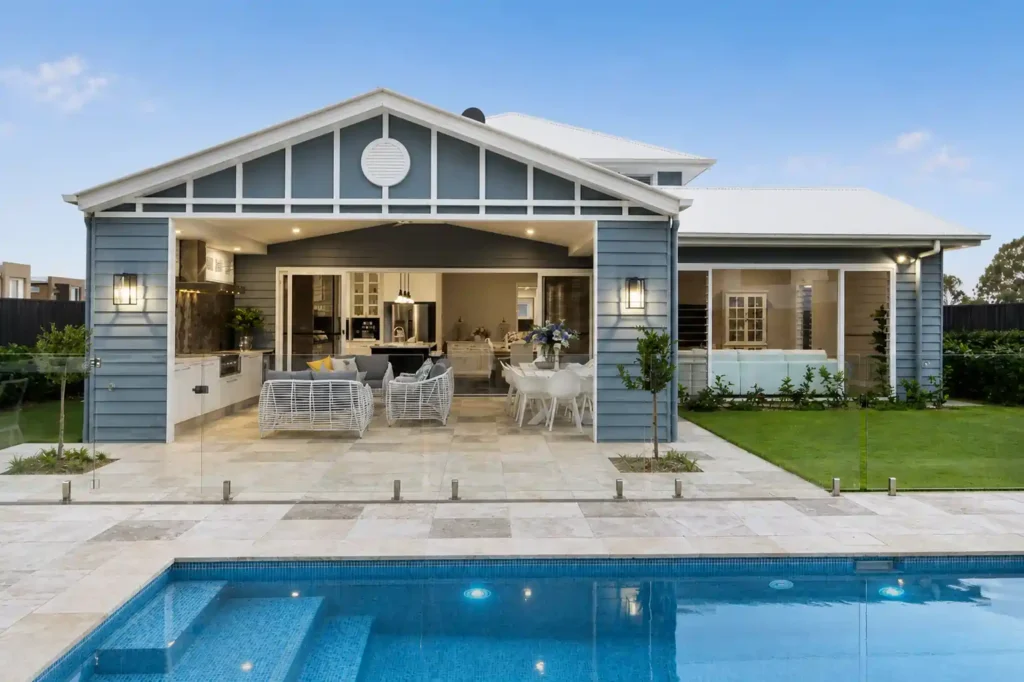
The position of the pool gate latch is also important. The QBCC states that outside pool gate latches must be at least 1500mm from the ground, measured from finished ground level to the underside of the latch-release handle, and 1400mm above the top of the highest lower horizontal member.
For inside latches, the QBCC states that the latch must be at least 150mm below the top of the gate or any hand-hole, and must be covered with a 450mm-radius shield, with no gaps greater than 10mm within the shield when the gate is closed.
These rules are designed to make it harder for young children to reach or operate the latch. If a latch is too low, too easy to reach or accessible through a gap, it may not meet the standard.
When building a new pool in Brisbane, the gate and latch system should be selected with safety, durability and compliance in mind. It is not just about choosing a gate that looks good. It must also perform correctly every day.
Pool Gate Hinges and Safety Caps
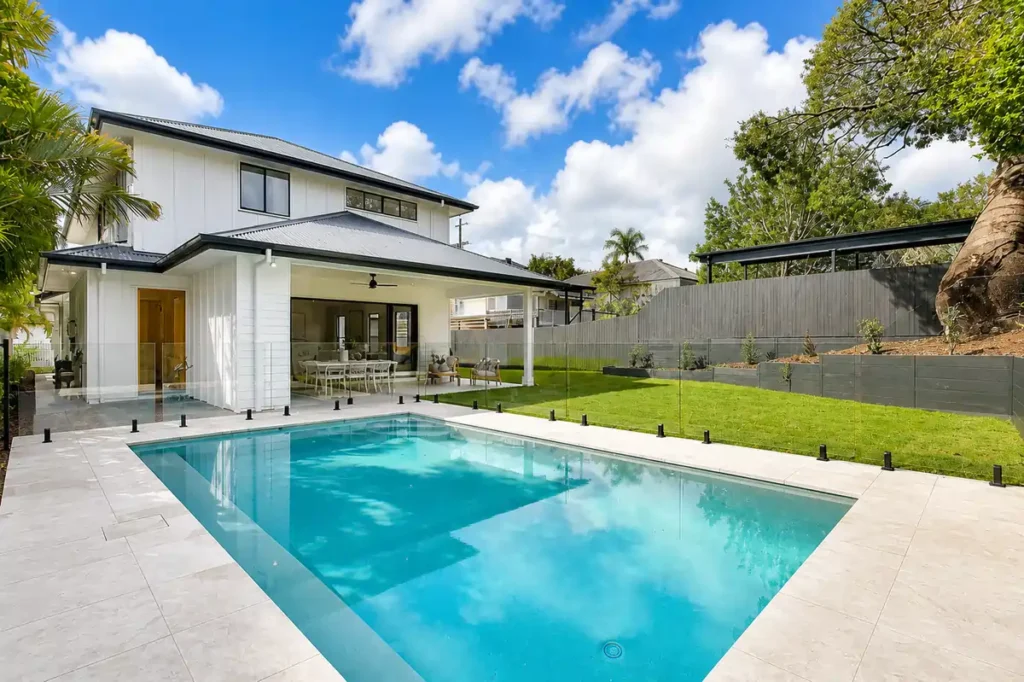
Hinges can pose a climbing risk if they protrude over 10mm. The QBCC states pool gate hinges must be at least 900mm apart or have safety caps if closer. Homeowners may overlook this detail, but it impacts pool safety inspections. Small hardware choices influence barrier compliance. Professionals know that compliance includes hinges, latches, gaps, rails, hand-holes, and nearby objects.
CPR Signs and Warning Signs
Queensland pool safety standards also include signage requirements. The Queensland Government states that if you have a pool, you must display a CPR sign prominently. If you are building a new pool, you must display a warning sign during construction and a CPR sign when the pool is completed.
For CPR signs, the Queensland Government explains that when replacing a sign, it should be attached to the pool safety barrier or displayed near the pool so it can be seen easily, be at least 300mm x 300mm, be made from durable and weatherproof material, and include a prominent emergency instruction statement.
During construction, the warning sign must warn people that a swimming pool is under construction and that young children are at risk if they access the land. It must be placed within 1.5m of the road frontage, mounted with the bottom at least 300mm above ground level, visible from the road, weatherproof and written in bold text at least 50mm high.
For homeowners building a new pool, signage is a simple but important requirement. It should be included in the planning and construction checklist.
Pool Safety Certificates in Brisbane
A pool safety certificate confirms that a pool complies with the relevant safety requirements and standards. Brisbane City Council states that a pool safety certificate is issued by a licensed pool safety inspector and is valid for one year for a shared pool and two years for a non-shared pool.
You may need a pool safety certificate if you are selling, buying or leasing a property with a pool. Brisbane City Council also notes that if you buy a property without a pool safety certificate, you must get a certificate within 90 days of settlement.
For homeowners planning to sell or lease a property, pool compliance should be checked early. Waiting until the last minute can cause delays, extra costs and stress if defects are found.
For homeowners building a new pool, the safest approach is to plan with compliance in mind from the very beginning, rather than trying to correct issues after construction.
Common Reasons Pool Fences Fail
Many pool barriers fail because of small issues that develop over time. The Queensland Government lists common failure reasons including gates not self-closing and self-latching from all points, barriers under 1200mm high, climbable rails on adjoining boundary fences, windows opening into the pool area by more than 100mm and climbable objects placed near the pool fence or barrier.
For homeowners, this means pool safety is an ongoing responsibility. Even if your pool was compliant when it was first built, it can become non-compliant later.
Common problems include:
- the gate no longer self-closes properly
- the latch does not catch every time
- garden beds have raised the ground level
- furniture has been placed too close to the fence
- trees or shrubs have grown into the non-climbable zone
- boundary fences have deteriorated
- glass panels have moved
- gaps have appeared under the barrier
- hinges have become loose
- DIY repairs have changed the gate or fence performance
- new decking or paving has affected fence height
- pool equipment has been installed too close to the barrier
Regular checks can help homeowners identify these issues early.
Pool Fencing and New Pool Construction
When planning a new pool, the fence should be considered part of the overall pool design. A well-planned pool area should balance safety, compliance, visual appeal and everyday usability.
At CL Pools Brisbane, our team understands that homeowners want a pool that looks beautiful, feels practical and suits their lifestyle. Whether you are planning a custom concrete pool, plunge pool, courtyard pool, lap pool, indoor pool, glass edge pool or a pool and spa combination, the layout should allow sufficient space for safe access, compliant fencing, practical gate placement and smart landscaping.
Good planning can help avoid common problems such as:
- gates opening into awkward areas
- non-climbable zones being blocked by design features
- pool equipment being too close to the fence
- retaining walls creating climbable surfaces
- landscaping interfering with barrier height
- stairs creating gap or height issues
- glass panels needing complex installation
- outdoor furniture being too close to the pool barrier
- poor access for maintenance
The earlier these details are considered, the smoother the construction process can be.
Pool Fence Rules for Pool Renovations
Pool renovations can also raise important safety considerations. If you are updating an older pool, changing the pool shape, replacing coping, installing new paving, adding decking, upgrading pool surrounds, or changing landscaping, the existing barrier should be reviewed.
Even small changes around the pool area can affect compliance. For example, new decking may raise the finished ground level near the fence. A new retaining wall may create a climbable surface. New plants may grow into the non-climbable zone. A new glass fence may create gaps near stairs.
If your pool is older, the fence may also have been built to previous standards. While some existing barriers may be treated differently depending on circumstances, Queensland Government guidance notes that if you are selling or leasing a property, the barrier must comply with the current standard, and any replacement pool fence or barrier must also comply with the current standard.
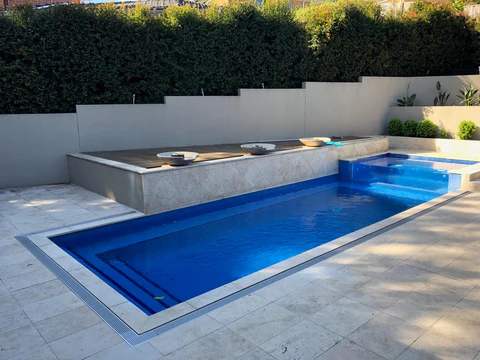
Glass Pool Fencing Considerations
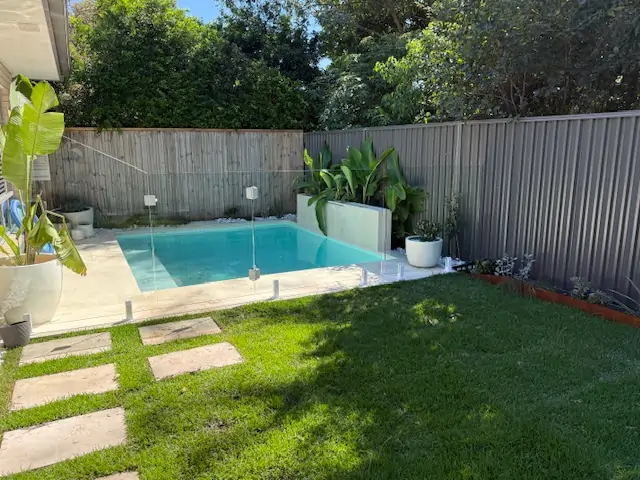
Glass pool fencing is popular in Brisbane for its modern, open, and premium look. It can be a great choice for homeowners who want clear views of the pool from the house, alfresco area, or outdoor entertaining space.
However, glass fencing must still comply with safety requirements. The QBCC states that glass pool fence panels must be made of reinforced glass and must not show signs of fracture. It also highlights common problems with glass fences, including accessible ledges greater than 10mm, gaps under the bottom greater than 100mm, issues around stairways, panels that are too low on stairs, and wobbly or dislodged panels.
For homeowners, this means glass fencing should be installed properly and checked regularly. Ground movement, poor installation, or damage can affect safety and compliance.
Glass fencing can look excellent around concrete pools, plunge pools and luxury backyard designs, but it must be planned with the correct height, panel stability, stair measurements, ledge control and non-climbable zones.
Boundary Fences as Pool Barriers
In some cases, a boundary or dividing fence may form part of the pool barrier. The QBCC explains that a boundary fence may be used as a pool barrier if it is at least 1200mm high, non-climbable on the outside and has no accessible climbable items within 300mm on the inside.
The Queensland Government also states that dividing fences used as pool barriers are common in Queensland and that both you and your neighbour are responsible for maintaining this barrier under pool safety laws.
This can be especially relevant in Brisbane suburbs where many backyard pools are positioned near property boundaries. If your new pool design relies on a boundary fence as part of the barrier, it is important to check the fence height, rails, climbable objects, condition and long-term maintenance responsibilities.
Pool Owners’ Responsibilities
Owning a pool means maintaining more than just clean water. Brisbane City Council states that property owners must register the pool with the QBCC, ensure the pool is enclosed by a barrier that complies with pool safety standards and ensure a CPR sign is displayed in a prominent location.
Pool owners should regularly check:
- the gate closes and latches by itself
- the latch works from every open position
- the fence height has not been affected by landscaping
- there are no large gaps under or through the barrier
- no furniture or objects are within climbable zones
- CPR signage is visible and in good condition
- glass panels are secure
- hinges and latches are not loose
- boundary fences remain strong and compliant
- trees and plants are trimmed away from the barrier
Pool safety is not a one-time task. It is part of responsible pool ownership.
How CL Pools Helps Brisbane Homeowners Plan Better Pool Projects
CL Pools is a trusted swimming pool builder in Brisbane with more than 50 years of experience. Since 1972, we have helped homeowners create pools that are designed for lifestyle, quality and long-term value.
We specialise in custom concrete pool construction, plunge pools and pool renovations across Brisbane and surrounding areas. Our team understands the importance of planning every part of the pool carefully, from excavation and steel reinforcement through to shotcrete application, finishes, pool surrounds and practical design considerations.
Our onsite construction process includes:
- precise excavation to achieve your ideal pool shape
- steel reinforcement for strong structural performance
- engineer inspection to meet strict safety and quality expectations
- shotcrete application using a durable pool shell mix
- tailored planning to suit your space, lifestyle and vision
While pool safety certification must be handled by appropriately licensed professionals, CL Pools can help you plan your pool project with safety and compliance in mind from the start. We work with homeowners to create pools that are visually impressive, practical to use and thoughtfully designed for Queensland conditions.
Planning a New Pool in Brisbane? Start with the Right Advice
If you are planning a new pool, a pool renovation, a plunge pool or a custom concrete pool in Brisbane, it is important to consider pool fencing early. The fence location, gate position, surrounding levels, landscaping and access points can all influence the final result.
A beautiful pool should not only look good on completion. It should function well for years, suit your lifestyle and support safe use for your family and guests.
Before you begin your project, ask these questions:
- Where will the pool fence be positioned?
- Will the gate self-close and self-latch correctly?
- Are there any climbable objects near the proposed fence line?
- Will landscaping affect the final barrier height?
- Will the pool design work with boundary fences?
- Will glass fencing need special planning around stairs or ledges?
- Where will the CPR sign be displayed?
- Will the pool area remain practical for everyday access and maintenance?
- Do you need a licensed pool safety inspector or building certifier involved?
The earlier these questions are answered, the better your pool project can be.
Speak with CL Pools Brisbane
Whether you are building a backyard oasis, upgrading an older pool or planning a new custom concrete pool, CL Pools is here to help. With decades of hands-on experience and a strong reputation across Brisbane, we deliver professional pool construction with care, craftsmanship and attention to detail.
From concrete pools and plunge pools to pool renovations and tailored backyard designs, our team can help you create a pool area that suits your home, lifestyle and long-term goals.
Call CL Pools today on 0404 845 406 or email daniel@clpools.com.au to discuss your new pool project in Brisbane and surrounding areas.
Frequently Asked Questions - Pool Fence Rules in Queensland
What is the minimum pool fence height in Queensland?
In Queensland, pool fences must generally be at least 1200mm high when measured from finished ground level to the top of the fence. The fence must also be built on stable and solid ground, and the height must be maintained at all points, including sloping or stepped areas.
Do pool gates need to be self-closing in Queensland?
Yes. Pool gates must be self-closing and must self-latch from any open position. They must also not open towards the pool area. Homeowners should regularly test the gate from several open positions to make sure it closes and latches securely every time.
What is a non-climbable zone around a pool fence?
A non-climbable zone is a clear area around the pool barrier that helps prevent children from climbing over the fence. Queensland pool safety standards require continuous 900mm non-climbable zones. Items such as chairs, pot plants, BBQs, storage boxes, trees, ladders and outdoor furniture should not be placed where they create a climbing risk.
Do I need a CPR sign near my pool in Queensland?
Yes. Queensland pool owners must display a compliant CPR sign prominently. The sign should be easy to see from near the pool area and should be durable, weatherproof and correctly sized.
Do spas need pool fencing in Queensland?
Spas are generally included under pool safety requirements in Queensland, even if they have lockable lids. If you are installing a spa or pool and spa combination, check the safety requirements before construction.
Can a boundary fence be used as a pool fence?
In some situations, a boundary fence can form part of the pool barrier if it meets safety requirements, including minimum height and non-climbable zone requirements. Because boundary fences involve neighbouring properties, they should be checked carefully.
What are common reasons pool fences fail inspections?
Common reasons include gates not self-closing or self-latching, fence height being too low, climbable objects near the fence, gaps under the barrier, climbable rails, damaged fencing, non-compliant windows opening into the pool area and poorly maintained gates or latches.
Do I need a pool safety certificate when selling my home?
You may need a pool safety certificate when selling, buying or leasing a property with a pool. Requirements can depend on the transaction, so it is best to check with a licensed pool safety inspector, conveyancer or local authority before listing or leasing the property.
Can landscaping affect pool fence compliance?
Yes. Landscaping can affect compliance if it changes ground levels, creates climbable surfaces or places objects too close to the pool barrier. Garden beds, retaining walls, rocks, trees, outdoor furniture and raised decking can all create issues if not planned carefully.